

If you lost your wallet or purse on the way to work today and a stranger found it, do you think you would get it back?
Your answer to this seemingly-random question — do you think you’d get your wallet back — matters more than you might think. It predicts your happiness, but it also predicts the length of your life, and even the health of your entire neighbourhood. Psychologists have found that if they ask enough people this simple wallet question, they can get a pretty good idea about the health and economic trajectory of entire nations.
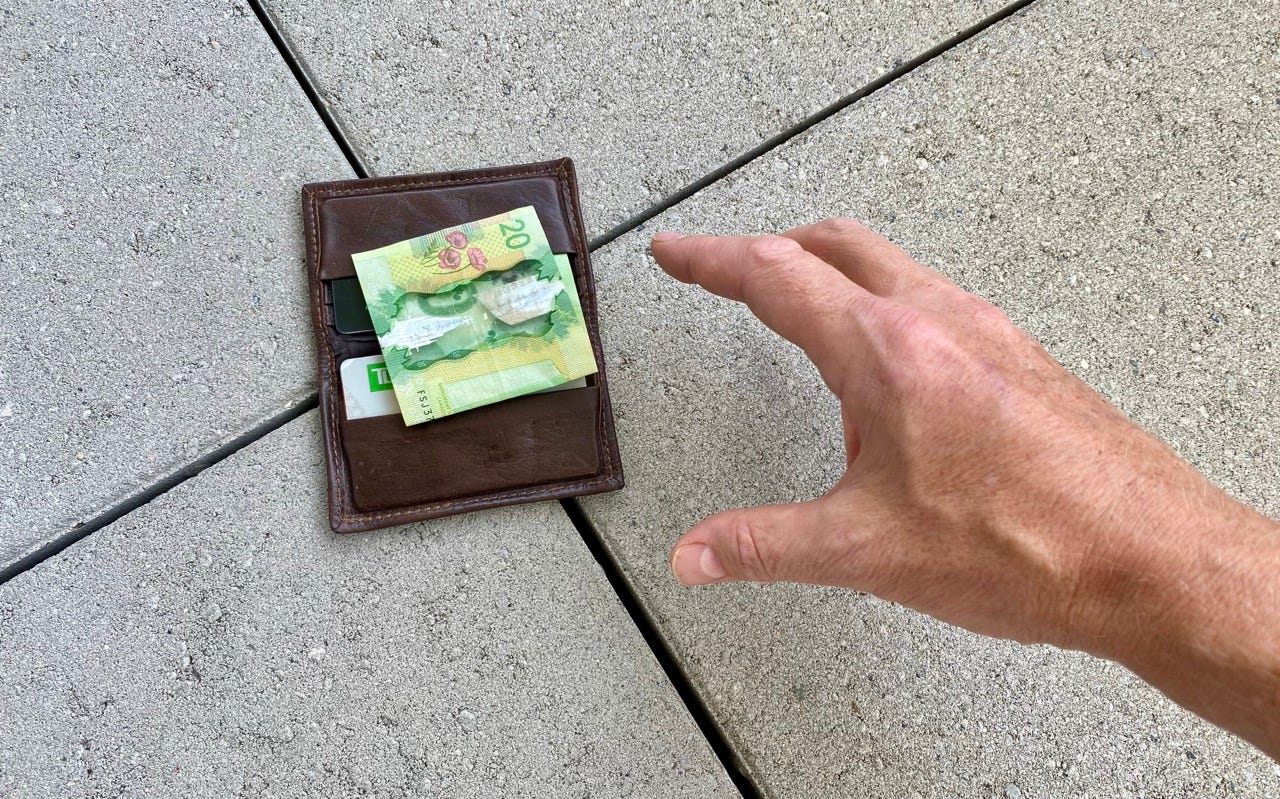
Why is the wallet question so powerful? Because it is a marker of social trust—our belief in the decency and dependability of other people. When we trust other people, we don’t just feel happier. We are more likely to feel empathy and care for each other. We are more likely to cooperate with each other. We are more likely to make sacrifices for the common good. In fact, social trust is such a powerful driver of human cooperation that high trust levels accurately predicted lower death rates from calamities ranging from tsunamis to the COVID-19 pandemic.
The bad news is that much of the world is experiencing a trust drought. Only a quarter of us think we’d get our lost wallet back. In some countries—most notably, the USA—confidence in neighbours, strangers and institutions has plummeted in the last thirty years. The number of Americans who say they don’t have a single close friend has quadrupled since 1990. A quarter of American millennials say they have zero friends. Google searches for the term, “Who can I trust?” have doubled since 2015. The Edelman Global Trust Barometer has shown trust in government, media and business in the US falling to lows not seen since the Great Depression.
This collapse in confidence leaves us all impoverished. It shrinks our networks of friends and collaborators. It reduces our reservoir of support in hard times. It jacks up the concentration of toxic stress hormones coursing through our veins. It steals economic opportunities. It shortens lives.
It also endangers our collective future: In countries where social trust is scarce, people are less willing to invest in social programs or make sacrifices to protect the environment. If we don’t place faith in the good intentions of others, we lose the ability to solve the great challenges of our age.
But…people are actually more trustworthy than we think!
The good news is that we almost always underrate the kindness and integrity of strangers. Lost wallets, for example, get returned at more than double the rate that most people predict in countries all over the world. Crime rates have been dropping in countries like the USA for years. Studies show that for the past half century, people have been growing more—not less— generous and cooperative with strangers. The vast majority of people are honest, kind and fair-minded.
So why do trust and trustworthiness so rarely align? My research on The Trust Experiments (out in January, 2027) has convinced me that this is, in part, the result of a collision between human psychology and countless bad design decisions over the course of modern history.
Humans were born for connection. We yearn to belong in trusting social groups. But we have designed the modern world in ways that make it really hard to experience the goodness of other people.
Take social media. Apps like Facebook and X promise to connect us meaningfully with other people. But their business models depend on advertising, so these platforms have been designed to boost content that captures and engages our attention. What are the most engaging forms of content? Messages that generate rage, fear and disgust towards people outside our own social group. And the most viral social media posts are written by a tiny, extreme minority of people. On Reddit, only 3% of accounts produce toxic content. On X, 97 percent of political posts are generated by just 10 percent of users, the majority of whom hold views at the ideological fringes.
Or consider modern cities. Since World War II, cities—especially those in North America—have been built around private automobiles. The first car-based suburbs offered residents an unprecedented level of autonomy and privacy, close to city centers. But decades of car-based urban growth have trapped millions of people in long, solo commutes from neighborhoods where streets discourage walking. Surveys show that residents of these neighborhoods are the least likely to know and trust their neighbours—not because the people are unfriendly, but because the city has removed casual social opportunities from their days.
These aren’t the only systems messing with our relationships. Homes are designed to maximize value for international investors rather than neighbourly relations. Neighborhoods have been drained of places to meet. Workplaces have been super-sized into alienating organizations with thousands of employees. And governments have designed economies that widen the gap between rich and poor, corroding people’s trust in the institutions that should serve us all.
Disconnection and division are not inevitable.
The environments that push us apart were designed by humans— which means we can change them. We can fix them.
I have gathered the evidence, and it’s wildly inspiring.
Over the last decade, I have searched for, and found, people all over the world who have been adventurous enough to redesign their environments to nurture human relationships. In Germany, I met architects who built an urban village that nurtured friendship between Germans and refugees. In Taiwan, I met digital activists who harnessed artificial intelligence to build a platform that helped their nation build consensus across political divides. In the U.S, I met activists who took control of urban development plans to heal a century of racial harms. In Denmark, I met a room full of five-year-olds who were learning how to make fair, democratic decisions together. These trust rebels were all redesigning their worlds in ways that improved trust.

I also found evidence in trust experiments I conducted on my own life. After a breakup a decade ago, I found myself experiencing feelings of crushing anxiety and alienation. Although my day job involved helping cities around the world design for happiness, I realized that my own home—a one-bedroom apartment in an unwalkable neighborhood far from friends and family—was a happiness disaster. My environment was functioning like a kind of loneliness machine. It pushed me away from people.
So I threw my lot—and my life savings—in with a group of strangers who were determined to build an apartment building that would function more like a village. Everything about that building—from shared gardens and a sunny common dining room, to circulation spaces that nudged us into contact with one another—was configured to nurture friendship between neighbors. It would be the opposite of my last home. It would be a domestic trust machine.
The experiment worked. I am now writing these words from my home in that trust machine. After five years, I know all of my 40 neighbors by name. I consider many of them friends. I have come to love a few of them like family. And I don’t lock my front door anymore.
Some of these stories appear in my new book, The Trust Experiments: Building Connection in a World Designed to Divide Us. But there wasn’t room in the book to include them all. And I keep uncovering shining pieces of evidence that tell us even more about the intersection of design and social trust. I want to share these with you. So… welcome to my Substack.
What to expect from my Substack
I will share dispatches from design experiments happening in buildings, cities, social science labs, digital environments and in governments around the world. I’ll offer insights from the realms of neuroscience, psychology and sociology, and occasionally, results of trust experiments I’m conducting in my own life. I’ll also link to groundbreaking trust and design reports from my colleagues at Happy Cities, and other people I admire.
If you help create physical or digital environments for humans, or if you simply want to understand how the systems around you influence your own social world, I hope my letters can help. I’d also love to hear about your own trust experiments.
A caveat: I’m new at Substack, so this newsletter will take some time to evolve. For now, subscribers will receive dispatches—never more than once a week, I promise, and probably a lot less!—and a chance to join discussions in the comments.
We really can redesign our world in ways that strengthen the trusting relationships that keep us all strong and happy. I hope we can build a movement around that truth. Please join me, and share the good news!
Sincerely,
Charles
Thank you for this hopeful and timely intellectual journey. Brilliant work as usual. I look forward to further dispatches in service of building a more compassionate world.